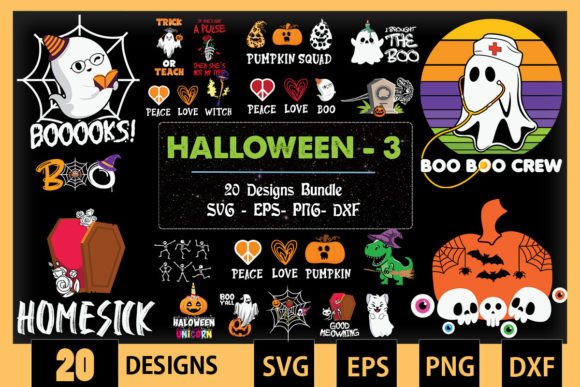
Halloween SVG Bundle 20 Designs: A Designer’s Review
As an embroidery designer who has spent countless hours digitizing motifs and troubleshooting stitch-outs, I approach new design assets with a healthy dose of skepticism. We have all been there: downloading a bundle that looks stunning on a screen but turns into a tangled mess of thread breaks and puckering once it hits the hoop. When I first opened the Halloween SVG Bundle 20 Designs, my immediate goal was not just to admire the aesthetics, but to evaluate its viability for real-world production. This review is written from the perspective of someone who needs these files to perform reliably in a commercial or serious hobbyist setting.
First Impressions and Visual Personality
The initial visual impact of this bundle is strong. The twenty designs capture the playful yet spooky essence of the season without relying on overly complex gradients or shading that often fail in thread form. The mood is whimsical rather than terrifying, which broadens the potential market significantly. For an embroidery project, simplicity is often key. Complex illustrations require high stitch counts and dense coverage, which can stiffen fabric and increase production time. These designs appear to balance detail with open space, a crucial factor for maintaining the drape of garments like t-shirts or lightweight tote bags.
The layout of each graphic suggests a clear understanding of shape language. Whether it is a stylized pumpkin, a ghostly figure, or seasonal typography, the lines are clean. This clarity is essential when translating a digital image into a physical machine embroidery design. Clean vectors usually translate to cleaner stitch paths, reducing the likelihood of jumps and trims that can clutter the final look.
Real-World Application: The Tote Bag Test
To truly understand the value of these assets, I imagined a specific scenario: preparing a custom order for a local boutique selling handmade holiday gifts. The client wanted a set of embroidered tote bags featuring subtle Halloween motifs. This is where the Halloween SVG Bundle 20 Designs would face its first practical test. Tote bags are typically made from canvas or heavy cotton, which can handle moderate stitch density, but the texture of the weave can sometimes obscure fine details.
I selected a few designs from the bundle to visualize on a standard 15x15 inch hoop. The larger motifs would work beautifully as central focal points on the bag’s front panel. However, the smaller icons raised a question about visibility. In embroidery, a design that looks crisp on a monitor might disappear into the fabric texture if the elements are too thin. For a tote bag design, I would recommend using these graphics with a solid fill stitch or a dense satin stitch border to ensure they pop against the coarse fabric. The transparent background PNGs included in the package allow for easy mockup creation, helping clients visualize the final product before a single needle pierces the cloth.
Navigating File Formats and Technical Constraints
It is vital to address the technical specifications provided. The bundle includes PNG files at 300 DPI with transparent backgrounds. This resolution is excellent for printing, sublimation, or creating printable mockups for your online store. However, the description notes that SVG files cannot be created in certain contexts, and importantly, these are not native embroidery file formats like PES, DST, or JEF. For an Etsy seller or craft business owner, this distinction is critical.
If you are using these graphics for machine embroidery, you will need to digitize them yourself or use auto-digitizing software. While PNGs are great for reference, they do not contain stitch data. This means the quality of your final finished product depends heavily on your digitizing skills or the software you use to convert these images. If you are not a digitizer, you might find these files more suitable for heat transfer vinyl (HTV), sublimation, or printed apparel rather than direct stitching. Always check the license terms to confirm whether the files are intended for personal use only or if they allow for commercial application in your specific workflow.
Fabric and Hoop Considerations
When planning to use these designs for custom apparel or sweatshirt embroidery, consider the fabric texture. Stretchy fabrics like jersey knits require careful stabilization. A design with large solid areas might cause puckering if the stabilizer is not robust enough. I recommend testing the design on scrap fabric first, ideally using the same weight and type of material as your final product. Check thread color contrast carefully; a black thread on a navy sweatshirt might look muddy, whereas a bright orange or white would stand out sharply.
For smaller items like baby embroidery on onesies or bibs, hoop size is a limiting factor. Ensure that the design fits comfortably within your smallest hoop without compromising the integrity of the motif. Tiny lettering or intricate corners can become lost if the design is scaled down too much. Always inspect small details at 100% zoom before committing to the hoop.
Enhancing Brand Consistency and Product Value
For small shop owners, consistency is key to building brand trust. Using a cohesive set of graphics like the Halloween SVG Bundle 20 Designs allows you to create a unified collection of products. Imagine offering a matching set of aprons, tea towels, and pillow covers. The visual personality of these graphics supports a professional, curated look that appeals to buyers looking for high-quality personalized gifts.
The versatility of the bundle also supports diverse revenue streams. You can use the PNGs for digital products, such as printable wall art or party invitations, while simultaneously using the motifs for physical goods like embroidered patches or caps. This multi-channel approach maximizes the return on investment for your design assets. Just remember that for curved surfaces like caps, you must adjust the push and pull compensation in your digitizing process to prevent distortion.
Practical Notes for the Embroidery Designer
- Test on Scrap Fabric: Never run a new design on your final garment without a test stitch-out. Check for thread breaks and tension issues.
- Stabilizer Selection: Use cut-away stabilizer for stretchy fabrics and tear-away for stable woven materials to support the stitch density.
- Color Contrast: Mock up your design in black and white first to ensure the shapes are distinct and readable without relying on color.
- License Verification: Confirm whether the license allows for commercial use of finished physical items versus digital resale. Most bundles allow selling finished goods but prohibit reselling the digital files themselves.
- Detail Inspection: Zoom in on the PNGs to identify any pixelation or blurry edges that might complicate the digitizing process.
In conclusion, the Halloween SVG Bundle 20 Designs offers a solid foundation for creative entrepreneurs looking to expand their holiday offerings. While the lack of native embroidery files means extra work for machine embroiderers, the high-resolution PNGs provide excellent flexibility for various crafting methods. By approaching these graphics with a strategic mindset—considering fabric type, hoop size, and end-use—you can transform these digital assets into profitable, high-quality handmade products that delight customers and enhance your brand’s reputation.